
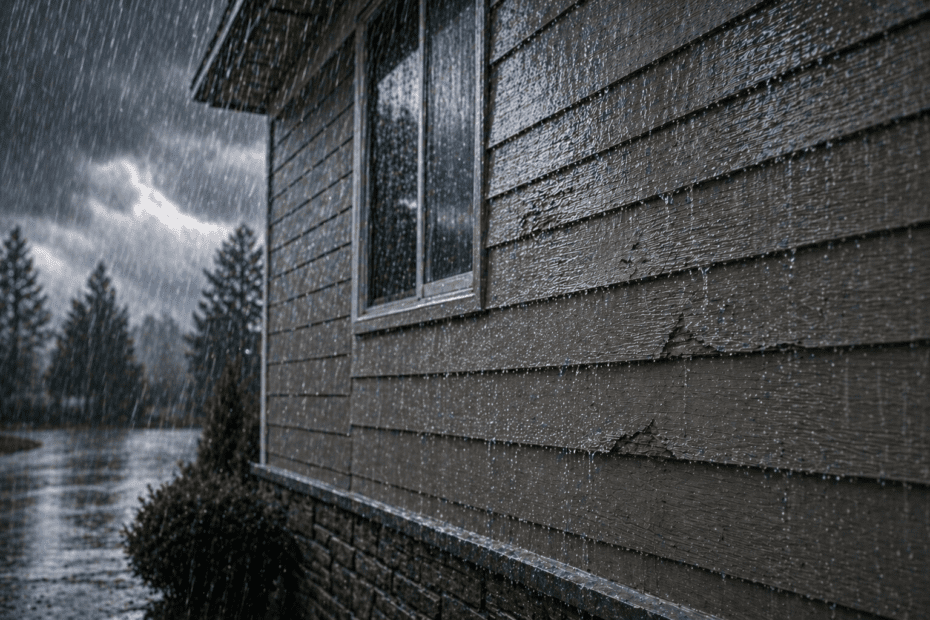
South Dakota is not a state that goes easy on your home. From the howling blizzards of January to the hailstorms of June, from blistering summer sun to whipping chinook winds that can swing temperatures 40 degrees in a matter of hours — the Black Hills region dishes out some of the most varied and punishing weather conditions in the entire United States. And the surface that takes the brunt of it all, year after year, is your home’s siding.
At Ghost Canyon Exteriors, we’ve been working as an exterior siding contractor in Rapid City and the surrounding Black Hills communities for years. We’ve seen firsthand what South Dakota’s weather does to every type of siding — and we know exactly which materials hold up, which ones don’t, and what homeowners can do to protect their investment. In this guide, we’ll walk you through the specific weather threats your siding faces and how to respond with smart, affordable siding services that keep your home protected for the long haul.
Understanding the Rapid City Climate: Why It's Hard on Siding
Rapid City sits at approximately 3,200 feet of elevation on the eastern edge of the Black Hills. This unique geographic position creates a climate that combines the extremes of the northern Great Plains with the microclimatic effects of the surrounding hills. The result is a weather environment that challenges exterior building materials in ways that lower-elevation, more temperate regions simply don’t.
Here are the primary weather forces that every exterior siding contractor in Rapid City must account for:
- Extreme temperature swings: Rapid City regularly experiences temperature changes of 30 to 50 degrees Fahrenheit within a single day, particularly in spring and fall. These swings cause building materials to expand and contract repeatedly, stressing joints, fasteners, and the siding itself.
- Hail: South Dakota is in the heart of Hail Alley. Hailstones over 1 inch in diameter — large enough to cause significant siding damage — are a routine occurrence during severe weather season.
- High UV exposure: At elevation, UV radiation is more intense than at sea level. This accelerates the fading, bleaching, and degradation of paint, stain, and certain siding materials.
- Freeze-thaw cycles: Repeated freezing and thawing throughout the winter and early spring forces moisture in and out of siding materials, leading to cracking, warping, and delamination over time.
- Heavy snowfall and ice: Snow load and ice formation can physically stress siding, particularly around eaves and lower courses where ice dams are most likely to form.
- Chinook winds: The powerful, warm winds that periodically descend from the Rockies can gust to 60 mph or more in the Black Hills area, putting significant mechanical stress on siding panels, fasteners, and trim.
How South Dakota's Weather Damages Each Type of Siding
Before you fall in love with a paint chip, take a step back and consider your home’s architectural style. Certain colors pair naturally with certain styles, and working with — rather than against — your home’s bones will always produce the best results.
Vinyl Siding
Vinyl is the most common siding material in Rapid City, and it performs reasonably well in moderate conditions. However, South Dakota’s extremes reveal its vulnerabilities. In very cold temperatures, vinyl becomes brittle and is significantly more prone to cracking on impact — a problem that’s compounded by hail season arriving in spring before temperatures have fully stabilized. The intense UV at elevation also fades vinyl more quickly than at sea level, causing color shift that can be difficult to match for partial repairs.
Thermal expansion is another concern. Vinyl expands and contracts more than almost any other siding material with temperature changes. In a climate with Rapid City’s temperature swings, improperly installed vinyl can buckle, warp, or pull away from the wall as it cycles through expansion and contraction. This is why installation quality from a qualified exterior siding contractor matters enormously with vinyl
Wood Siding
Natural wood siding is beautiful but demanding in South Dakota’s climate. Wood is hygroscopic — it absorbs and releases moisture as humidity and temperature change — which means it’s constantly expanding and contracting. Over time, this movement leads to paint failure, cracking, splitting, and eventually rot if moisture is allowed to penetrate the wood fiber.
The elevated UV intensity in the Black Hills accelerates paint and stain breakdown on wood surfaces, meaning the protective coating that keeps moisture out degrades faster here than in lower-elevation climates. Wood siding in the Rapid City area typically requires professional restaining or repainting every two to three years to maintain its integrity — making affordable siding services for wood maintenance an important part of homeownership in this region.
Fiber Cement Siding
Fiber cement is widely considered one of the best performers in South Dakota’s climate. Its dense, hard composition makes it highly resistant to hail impact, UV fading, and insect damage. It does not expand and contract with temperature changes the way vinyl does, and it resists moisture absorption far better than natural wood. However, fiber cement is not completely maintenance-free — the factory paint finish or field-applied paint will eventually need refreshing, and any cracks in the finish should be addressed promptly to prevent moisture intrusion.
Metal Siding
Steel siding is gaining popularity in hail-prone regions like western South Dakota precisely because of its exceptional impact resistance. However, South Dakota’s freeze-thaw cycles and moisture exposure create a different concern: rust. Any chip or scratch in the protective coating of steel siding creates an opportunity for oxidation, which can spread beneath the finish if not addressed. Aluminum siding avoids the rust issue but is softer and dents more readily from hail. Both metal options perform well with proper installation and periodic inspection by a qualified exterior siding contractor.
Engineered Wood Siding
Engineered wood products like LP SmartSide are designed to outperform natural wood in moisture resistance and dimensional stability while maintaining a natural aesthetic. In South Dakota’s climate, engineered wood holds up better than traditional wood siding in freeze-thaw conditions, and its factory-applied primer and paint systems are formulated for durability. It still requires periodic repainting, but the intervals are typically longer than with natural wood.
Warning Signs That South Dakota Weather Has Damaged Your Siding
Many forms of weather-related siding damage are easy to miss unless you know what to look for. As an experienced exterior siding contractor, our team at Ghost Canyon Exteriors recommends that Rapid City homeowners inspect their siding at least twice a year — once in spring after hail season begins and once in fall before winter sets in. Here are the warning signs to watch for:
- Cracks, splits, or holes: Any breach in your siding’s surface is a potential entry point for moisture and insects.
- Warping or buckling: Panels that have pulled away from the wall, bowed outward, or rippled are failing to do their job.
- Fading or discoloration: Uneven fading or bleaching indicates UV damage and a compromised protective finish.
- Soft or spongy spots: Press gently along your siding surface. Any soft or spongy areas beneath the surface indicate moisture infiltration and potential rot in the underlying structure.
- Impact marks or dents: Circular dents or divots are the telltale sign of hail damage. Even if the siding hasn’t cracked, the surface may be compromised.
- Peeling paint or stain: On wood or fiber cement siding, peeling finish means moisture is getting behind the paint — action is needed quickly.
• Higher energy bills: A sudden increase in heating or cooling costs can indicate that damaged siding is allowing air infiltration into your home’s thermal envelope.
If you notice any of these warning signs, contact an exterior siding contractor for a professional assessment as soon as possible. Early intervention is almost always less expensive than waiting until small problems become major structural issues.
The Best Siding Materials for South Dakota's Climate
Based on years of experience as an exterior siding contractor in Rapid City, here is our honest assessment of how each major siding type ranks for the specific demands of South Dakota’s climate:
-
- Best overall performance: LP SmartSide — excellent hail resistance, dimensional stability, and longevity
- Best for hail resistance: Steel siding — impact resistance in severe hail events
- Best value: Thick-grade vinyl with quality installation — affordable siding services with solid performance when properly installed
- Best natural look: Engineered wood — better durability than natural wood with a similar aesthetic
- Highest maintenance requirement: Natural wood — beautiful but demands consistent upkeep to perform in our climate
Every home and budget is different. Our team will evaluate your specific situation — existing siding condition, budget, aesthetic goals, and long-term plans for the property — before recommending a material. We’re committed to providing affordable siding services that deliver real long-term value, not just the lowest upfront number.
How to Protect Your Siding From South Dakota Weather
Whether you have existing siding you want to extend the life of or you’re planning a full replacement, here are the steps our exterior siding contractor team recommends for protecting your home’s exterior in South Dakota’s demanding climate:
- Schedule regular professional inspections: A trained eye can spot early-stage damage that homeowners often miss.
- Address caulking and seals annually: Check around windows, doors, and siding joints every fall. Reapply caulk wherever seals have cracked or separated.
- Keep gutters clean and functional: Clogged gutters overflow and direct water against your siding, accelerating moisture damage.
- Trim vegetation away from siding: Branches and overgrown shrubs trap moisture against your siding and can cause physical abrasion in high winds.
- Maintain your paint or stain finish: On wood or fiber cement siding, a well-maintained finish is your primary moisture barrier. Don’t let it go past the point of peeling.
• Act quickly after storm events: If a hailstorm or severe wind event has impacted your area, get a professional inspection before the next season’s weather compounds any damage.
Rapid City's Trusted Exterior Siding Contractor: Ghost Canyon Exteriors
When South Dakota’s weather takes a toll on your home’s siding, you need an exterior siding contractor who understands the local climate, knows the best-performing materials for our specific conditions, and delivers quality workmanship that lasts. That’s exactly what Ghost Canyon Exteriors has been providing to Rapid City homeowners and Black Hills residents for years.
Here’s what sets us apart:
- 60+ years of combined experience in exterior siding installation, repair, and replacement
- Deep local knowledge of Rapid City’s climate, building codes, and highest-performing siding products
- Affordable siding services across a range of materials and budgets — we’ll find the right solution for your home and your finances
- Full exterior home services: Siding, windows, decks, painting, staining, and sunrooms — all under one roof
Don't Let South Dakota Weather Win — Get a Free Siding Assessment Today
Your siding is your home’s first line of defense against everything South Dakota can throw at it. Don’t wait for small problems to become expensive emergencies. Whether you need a simple repair, a targeted section replacement, or a full siding overhaul, Ghost Canyon Exteriors is ready to help with affordable siding services that stand up to the Black Hills climate.
Call us today at (605) 484-9571 or visit ghostcanyonexteriors.com to schedule your free, no-obligation siding consultation with Rapid City’s most trusted exterior siding contractor. Let’s make sure your home is ready for whatever the weather brings next.