
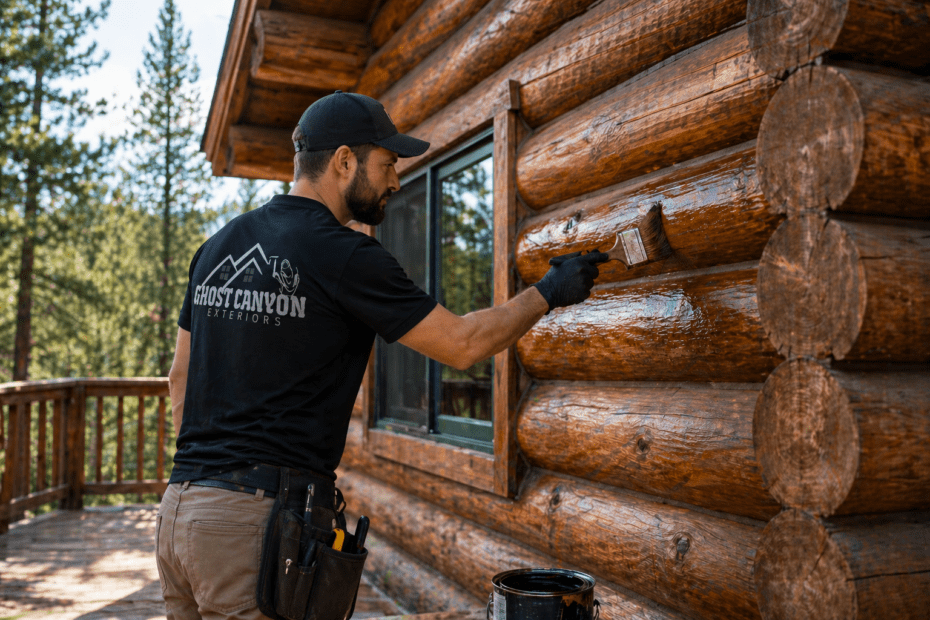
There’s something timeless about a log cabin. Whether it’s a full-time residence tucked into the Black Hills pines, a weekend getaway near Custer or Keystone, or a vacation rental property near Mount Rushmore, log cabins carry a warmth and character that no other style of construction can replicate. But that rustic beauty comes with a real responsibility: log cabins demand consistent, attentive exterior maintenance to stay healthy, structurally sound, and stunning for decades.
In South Dakota’s demanding climate — with its intense UV exposure, dramatic temperature swings, heavy snowfall, and periodic hailstorms — the exterior of a log cabin faces challenges that other home types simply don’t encounter to the same degree. At Ghost Canyon Exteriors, we provide comprehensive exterior home services to log cabin owners throughout the Rapid City area and the greater Black Hills region. In this guide, we’ll share our best tips for keeping your log cabin exterior in top shape, season after season.
Why Log Cabin Exteriors Require Special Attention
Logs are a living, breathing building material — even after they’ve been milled and installed. Wood expands and contracts with changes in temperature and humidity, checks (small surface cracks) develop naturally over time, and the surface is constantly exposed to UV radiation, moisture, and biological threats like mold, mildew, and insects. Unlike vinyl or LP SmartSide siding, there’s no factory-applied polymer coating protecting the surface from day one. The responsibility of protection falls entirely on your maintenance routine.
Neglected log cabin exteriors deteriorate rapidly. What starts as surface checking and minor stain fading can progress to deep cracking, rot, insect infestation, and ultimately structural compromise — all within a surprisingly short window of time if the South Dakota climate is allowed to work unchecked. The good news is that with a proactive maintenance schedule and the right exterior home services partners, a log cabin can stay beautiful and structurally sound for generations
Tip 1: Perform a Thorough Annual Inspection
The foundation of any good log cabin maintenance program is a thorough annual inspection — ideally in spring, after the worst of winter has passed and before summer’s UV exposure begins in earnest. Walk the full perimeter of your cabin and carefully examine every accessible surface. Here’s what to look for:
- Checking: Small surface cracks are normal in logs and are generally not a structural concern. However, deep checks that run horizontally along the top of a log can collect and hold water, accelerating decay. These need to be addressed with caulk or chinking.
- Soft or discolored wood: Press a penknife or screwdriver gently into any suspect areas. Soft, spongy, or darkly discolored wood indicates decay and needs immediate professional attention.
- Chinking and caulk condition: Inspect all chinking and caulk between logs for cracks, gaps, or sections that have separated from the log surface. These openings allow water and air infiltration.
- Stain condition: Is the existing stain still providing a uniform, protective coating? Fading, peeling, or areas where the wood looks gray and weathered indicate the stain has failed and needs refreshing.
- Insect activity: Look for small round holes (carpenter bees or wood-boring beetles), sawdust-like frass, or tunneling near log ends — all signs of insect activity that require prompt treatment.
- Mold and mildew: Dark streaking or blotchy discoloration on log surfaces indicates mold or mildew growth, which must be treated before any new stain is applied.
If your annual inspection turns up significant issues, contact a provider of professional exterior home services like Ghost Canyon Exteriors promptly. Early intervention is always less expensive than delayed action.
Tip 2: Clean Your Log Exterior Regularly and Correctly
When it comes to protecting your home, experience and honesty matter. Ghost Canyon Exteriors has been providing trusted exterior siding contractor services and home siding repair services to Rapid City homeowners and Black Hills residents for years. We bring the expertise to accurately diagnose siding damage, the craftsmanship to fix it right, and the integrity to give you a straight answer about what your home actually needs.
When you work with Ghost Canyon Exteriors, you get:
- Low-pressure washing: Use a garden hose or low-pressure washer to rinse the exterior. Avoid high-pressure washing — it can drive water deep into checks and cracks and physically damage the wood fiber on softer log surfaces.
- Log-specific cleaners: Use a cleaner formulated for log homes rather than general-purpose household cleaners, which can strip protective finishes or leave residues that interfere with stain adhesion.
- Mold and mildew treatment: If mold or mildew is present, treat affected areas with an appropriate wood-safe fungicide before cleaning and allow adequate drying time before applying any new stain or finish.
Ghost Canyon Exteriors offers professional exterior cleaning as part of our comprehensive exterior home services for log cabin owners throughout the Rapid City and Black Hills region.
Tip 3: Restain on Schedule — Don't Wait Until the Finish Fails
Stain is your log cabin’s primary defense against UV damage, moisture intrusion, mold, and weathering. In South Dakota’s high-altitude sun, stain breaks down faster than at lower elevations — meaning the maintenance interval for log cabins in the Black Hills is typically shorter than what manufacturers recommend for lower-elevation climates. Most log cabin exteriors in the Rapid City area need professional restaining every three to five years, with south and west-facing walls often requiring attention sooner.
When you work with Ghost Canyon Exteriors, you get:
Choosing the Right Stain
Not all stains are created equal, and choosing the right product for South Dakota’s climate is critical. Here’s what to look for in a quality log cabin stain:
When you work with Ghost Canyon Exteriors, you get:
- High UV inhibitors: Essential for Rapid City’s elevated UV environment. Look for products with transoxide pigments or UV-blocking additives.
- Water repellency: The stain should create a strong moisture barrier to protect against rain, snowmelt, and the freeze-thaw cycles of South Dakota winters.
- Mold and mildew inhibitors: A stain with built-in fungicide protection reduces biological growth between maintenance cycles.
- Penetrating formula: Penetrating oil-based or water-based penetrating stains generally outperform film-forming products on log cabins, as they flex with the natural movement of the wood without peeling.
Our exterior home services team at Ghost Canyon Exteriors has extensive experience selecting and applying the right stain products for log cabins in the Black Hills climate. We can help you choose a product that balances protection, appearance, and value — including affordable siding options for cabins that may need partial replacement alongside their restaining project.
Tip 4: Maintain Your Chinking and Caulking
Chinking — the flexible material applied between logs to seal gaps — and caulk applied in checks and around windows and doors are critical components of your log cabin’s weather envelope. Like the stain, they require periodic inspection and maintenance to remain effective.
In South Dakota’s climate, chinking and caulk experience significant stress from the thermal expansion and contraction of the logs and from freeze-thaw cycles. Even high-quality products will eventually develop cracks or separation from the log surface, and these gaps must be addressed before they allow water infiltration.
Best practices for chinking and caulk maintenance:
- Inspect all chinking and caulk joints during your annual exterior inspection
- Remove and replace any sections that have cracked through, separated from the log, or lost their flexibility
- Use only products specifically formulated for log homes — standard construction caulks may not bond properly to log surfaces or accommodate the movement of logs
- Pay special attention to horizontal checks on the top of logs where water can pool and penetrate
• Check all penetrations — around windows, doors, electrical outlets, and where logs meet the foundation
Tip 5: Stay Ahead of Insect and Pest Damage
Log cabins are inherently attractive to wood-boring insects. Carpenter bees, wood-boring beetles, and termites can all cause significant damage if left unchecked — and in the Black Hills region, carpenter bees in particular are a common and persistent problem for log cabin owners.
To protect your cabin from insect damage:
- Choose a stain with insect-repelling properties: Some log home stains include borate-based insecticides that penetrate the wood and deter boring insects.
- Apply borate treatments to log ends: Log ends are the most vulnerable entry points for insects and moisture. Regular borate treatment provides meaningful protection.
- Seal all checks and cracks: Eliminating entry points through good caulking practice also reduces opportunities for insects to establish themselves inside the log.
- Address active infestations promptly: If you discover signs of active insect damage, consult a pest control professional and then follow up with exterior home services to repair and refinish affected areas.
Tip 6: Manage Moisture, Drainage, and Grading Around Your Cabin
One of the most overlooked aspects of log cabin exterior maintenance is the management of moisture at and near grade level — the zone where your cabin meets the ground. Poor drainage, soil that slopes toward the cabin, vegetation growing against the logs, and wood-to-ground contact are among the leading causes of accelerated rot at the base of log structures.
Key moisture management practices:
- Maintain clearance at grade: There should be at least 6 to 8 inches of clearance between the bottom course of logs and the ground. If soil has built up against the logs over time, it needs to be removed.
- Ensure positive drainage: The ground around your cabin should slope away from the foundation on all sides to direct water away, not toward, the structure.
- Keep gutters clean and functional: Overflowing gutters direct large volumes of water directly against your log walls. Keep gutters clear, especially in fall when leaves are falling.
- Trim vegetation away from the cabin: Trees and shrubs growing against log walls trap moisture and shade the logs from the drying sun, creating ideal conditions for mold, mildew, and rot.
- Extend roof overhangs where possible: Generous roof overhangs are one of the best defenses a log cabin can have, keeping rain and snow away from the log walls below.
Tip 7: Know Your Siding Options When Logs Need Replacement or Supplementation
In some cases, sections of a log cabin exterior may deteriorate to the point where replacement with new or reclaimed logs is either impractical or cost-prohibitive. In these situations, there are affordable siding options that can blend beautifully with the existing log aesthetic while providing improved durability and reduced maintenance requirements.
Options worth considering include:
- Engineered wood siding (LP SmartSide): Available in profiles that mimic the look of natural wood with significantly better moisture resistance and a longer maintenance interval. One of the most affordable siding options that maintains a natural aesthetic.
- Cedar siding: Natural cedar is a beautiful and relatively durable option that complements log cabin aesthetics naturally. It still requires regular staining or sealing but is a proven performer in mountain climates.
- Fiber cement with wood-look profiles: For gable ends or non-log sections of a cabin exterior, fiber cement in a lap or board-and-batten profile can provide a clean, durable finish that pairs well with log walls.
Ghost Canyon Exteriors can evaluate the condition of your log cabin exterior and recommend the most appropriate and affordable siding options for your specific situation, whether that means full log restoration, selective replacement, or a combination approach.
Seasonal Maintenance Checklist for Black Hills Log Cabin Owners
Composite decking has grown dramatically in popularity over the past decade. Made from a blend of wood fibers and recycled plastics, composite boards are engineered to mimic the look of natural wood while offering significantly reduced maintenance requirements.
Spring:
- Conduct full exterior inspection after winter
- Clean exterior surfaces and treat any mold or mildew
- Repair chinking and caulk as needed
- Schedule professional restaining if stain is overdue
Summer:
- Monitor for insect activity, especially carpenter bees
- Inspect after any significant hailstorm
- Keep vegetation trimmed back from log walls
Fall:
- Clean gutters and verify drainage is functioning
- Seal any checks or cracks identified during the season
- Verify all chinking is intact before freeze-thaw season begins
Winter:
- Keep snow cleared from areas where it packs against log walls
- Note any areas of concern for spring follow-up
Ghost Canyon Exteriors: Exterior Home Services for Log Cabin Owners in the Black Hills
Log cabin maintenance requires a level of expertise and care that general contractors often lack. At Ghost Canyon Exteriors, our team has deep experience with the specific demands of log cabin exteriors in South Dakota’s climate. We provide comprehensive exterior home services — including professional staining, chinking repair, cleaning, and siding installation — tailored to the unique needs of log structures in the Black Hills region.
When you work with Ghost Canyon Exteriors, you can expect:
Options worth considering include:
- 60+ years of combined experience with exterior wood surfaces, staining, and siding
- Local expertise: We know what the Black Hills climate demands and select products and techniques accordingly
- Honest assessments: We tell you what your cabin actually needs — no upselling, no unnecessary work
- Affordable siding options: When replacement is needed, we’ll find solutions that fit your budget without compromising quality
- Free, no-obligation consultations: Transparent pricing from the very first conversation
Ready to Protect Your Log Cabin? Let's Get Started.
our log cabin is a significant investment and a one-of-a-kind piece of the Black Hills lifestyle. With the right exterior home services partner and a proactive maintenance approach, it can stay beautiful, structurally sound, and full of character for generations to come.
Call Ghost Canyon Exteriors today at (605) 484-9571 or visit ghostcanyonexteriors.com to schedule your free, no-obligation log cabin exterior assessment. Rapid City’s most trusted exterior home services team is ready to help you protect and preserve what makes your property special.