Your home’s siding is quietly working around the clock — shielding your walls from rain, wind, hail, UV rays, insects, and temperature extremes. Most of the time it does its job without asking for any attention at all. But like every hardworking part of your home, siding eventually shows signs of wear — and in a climate as demanding as Rapid City and the Black Hills region, those signs can appear sooner than many homeowners expect.
The challenge is that early siding damage is often subtle. A small crack here, a slightly warped panel there — easy to overlook during a casual glance from the driveway. But left unaddressed, minor siding damage has a way of escalating into major structural problems that are far more expensive to fix. The difference between a straightforward home siding repair and a full replacement often comes down to how quickly the damage was caught.
As Rapid City’s trusted exterior siding contractor, Ghost Canyon Exteriors has helped hundreds of homeowners across the Black Hills identify siding damage before it became a crisis. In this guide, we’ll walk you through exactly what to look for — and what to do when you find it.
Why Early Detection Is So Important
Siding damage rarely stays contained. Once your home’s protective exterior shell is compromised — even in a small area — moisture, air, and pests have a pathway into your wall cavity. From there, the damage can spread rapidly and silently:
Here are the primary weather forces that every exterior siding contractor in Rapid City must account for:
- Moisture intrusion leads to mold, mildew, and rot in wall sheathing, insulation, and framing — all of which are invisible from the outside until the damage is severe.
- Air infiltration through gaps and cracks drives up heating and cooling costs, often before homeowners realize the source of the problem.
- Pest entry through even small openings in siding can introduce insects and rodents into your wall cavities, creating further damage and health concerns.
The bottom line: early detection and prompt home siding repair services almost always save homeowners significant time and money. A small repair today can prevent a full siding replacement — or worse, structural remediation — tomorrow.
How to Inspect Your Siding: A Step-by-Step Approach
You don’t need to be a professional exterior siding contractor to perform a basic siding inspection. A careful walk around your home twice a year — ideally in spring after hail season begins and in fall before winter — can catch the majority of early-stage damage. Here’s how to do it right.
Start With a Visual Survey From a Distance
Begin by stepping back and viewing each side of your home from about 20 to 30 feet away. Look for anything that breaks the visual continuity of the siding — uneven lines, discoloration, bulging, or sections that appear to be pulling away from the wall. Changes in light reflection across siding panels can reveal warping or buckling that’s hard to spot up close.
Move In for a Close Inspection
Next, walk the perimeter of your home and examine the siding up close. Pay particular attention to areas that are most exposed to weather: south and west-facing walls tend to receive the most UV and North wind exposure in the Rapid City area, while north-facing walls are more prone to moisture retention and mold. Also give extra attention to siding near the roofline, around windows and doors, and at the base of the wall near grade level.
Use the Touch Test
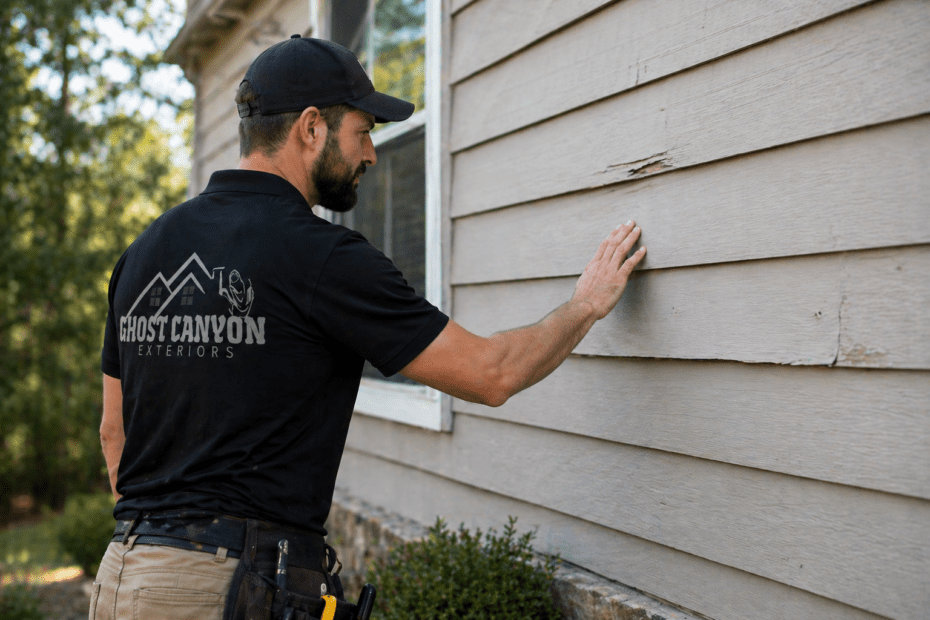
Don’t just look — touch. Press gently on different sections of your siding. Healthy siding feels firm and solid. Any sections that feel soft, spongy, or that flex more than they should indicate moisture has infiltrated the material or the underlying sheathing. This is one of the most reliable indicators of damage that needs immediate attention from a home siding repair services professional.
Check From Inside Too
Siding damage often manifests on the interior of your home before it becomes obvious on the outside. Check your interior walls for paint bubbling, water stains, peeling wallpaper, or damp spots — especially after heavy rain or snowmelt. Also inspect your attic and basement for signs of moisture intrusion that may be traced back to compromised siding.
Early Warning Signs to Look For: A Complete Guide
1. Cracks, Splits, and Holes
Any visible break in the surface of your siding is a red flag. Cracks and splits in vinyl, wood, or fiber cement siding allow moisture to enter the wall cavity directly. Small cracks may seem insignificant, but they expand with every freeze-thaw cycle — a process that repeats dozens of times each winter in the Rapid City area. Holes from impact damage, failed fasteners, or pest activity are similarly urgent.
What to do: Even a small crack warrants a call to your exterior siding contractor for an assessment. In many cases, prompt home siding repair services can address isolated damage before it spreads.
2. Warping, Buckling, or Bulging
Siding panels that have pulled away from the wall, bowed outward, or developed a rippled appearance are no longer providing a weather-tight seal against your home. This type of deformation can be caused by moisture trapped behind the siding, improper installation that didn’t allow for thermal expansion, or physical damage from impact or wind.
In vinyl siding, look for panels that have shifted out of their locking channels or that visibly wave when you run your hand along them. In wood siding, look for boards that have cupped, twisted, or pulled away from their nails. Any of these signs indicate that home siding repair services are needed sooner rather than later.
3. Peeling Paint or Stain
On painted or stained siding — particularly wood and fiber cement — peeling, bubbling, or flaking finish is a warning sign that moisture is present behind or within the siding material. Paint peels from the inside out: moisture vapor pushes through the siding and lifts the paint film from beneath. By the time you see peeling on the exterior surface, moisture has often already been present in the wall for some time.
In Rapid City’s high UV environment, paint degradation can happen faster than at lower elevations. Don’t wait until your siding looks obviously weathered — schedule professional restaining or repainting when the finish starts to look dull or chalky, before it reaches the peeling stage.
4. Fading and Discoloration
Significant or uneven fading — particularly on vinyl and cement siding — indicates that UV exposure has broken down the protective resins in the material. While fading is primarily a cosmetic issue in the early stages, it signals that the siding’s weather resistance has been compromised and that full replacement or paint may be on the horizon. Discoloration that appears as dark streaks or blotchy patches can indicate mold or mildew growth, which requires immediate investigation.
5. Mold, Mildew, or Algae Growth
Dark green, black, or white fuzzy growth on your siding surface indicates persistent moisture — either from water that isn’t draining away properly, a leak behind the siding, or a section of siding that retains moisture due to lack of sunlight. Surface mold can sometimes be cleaned, but if growth is extensive or recurs quickly after cleaning, it often points to a deeper moisture problem that requires investigation by a qualified exterior siding contractor.
6. Hail Impact Marks
After any significant hailstorm in the Rapid City area, it’s worth doing a careful inspection specifically for impact damage. On vinyl siding, look for circular cracks, dents, or divots — they’re often most visible when viewed at a low angle with raking light (sunlight hitting the surface from the side). On wood siding, look for fresh impact marks, splits, or areas where the paint has been knocked away. On fiber cement, look for chips or surface fractures.
Even if the surface looks mostly intact after a hailstorm, it’s worth having a professional inspection. Some hail damage weakens the structural integrity of siding panels without creating obvious visible marks, and a trained exterior siding contractor knows what to look for.
7. Loose, Missing, or Damaged Sections
Wind events — including the powerful chinook winds that periodically blast through the Black Hills — can loosen or completely remove siding panels. Any section of siding that rattles in the wind, has visible gaps between panels, or is visibly missing needs immediate home siding repair services to restore the weather-tight seal of your home’s exterior.
8. Rising Energy Bills
If your heating or cooling costs have increased noticeably without a clear explanation — new appliances, unusually extreme weather, rate changes — damaged siding may be the culprit. Gaps, cracks, and compromised panels allow outside air to infiltrate your home’s thermal envelope, forcing your HVAC system to work harder. This is a subtler sign, but it’s worth investigating if you’ve noticed unexplained energy bill increases.
9. Interior Water Stains or Damp Walls
Water stains on interior walls, ceilings near exterior surfaces, or in closets along exterior walls are a serious warning sign. By the time moisture is making its way through your wall system to the interior finish surfaces, the damage behind the scenes may already be significant. Don’t ignore these signs — contact an exterior siding contractor immediately for a comprehensive assessment.
When to Repair vs. When to Replace Your Siding
Not every sign of siding damage means you need a full replacement. Here’s a general guide to help you think through the decision:
- Isolated damage to a few panels: Repair is almost always the right call. Home siding repair services can address localized damage quickly and affordably.
- Widespread fading or weathering: If the overall appearance of the siding has significantly degraded, replacement may offer better long-term value than ongoing repairs.
- Moisture damage behind the siding: If inspections reveal rot, mold, or structural damage behind the surface, full replacement combined with remediation of the underlying damage is typically necessary.
- Siding over 20 years old: Older siding that’s experiencing widespread problems may be approaching the end of its useful life. Replacement with a more durable modern material often makes more financial sense than repeated repairs.
A qualified exterior siding contractor can assess your specific situation and give you an honest recommendation. At Ghost Canyon Exteriors, we never push for replacement when repair will genuinely do the job — but we’ll always tell you the truth when replacement is the smarter long-term investment.
Ghost Canyon Exteriors: Rapid City's Exterior Siding Contractor You Can Trust
When it comes to protecting your home, experience and honesty matter. Ghost Canyon Exteriors has been providing trusted exterior siding contractor services and home siding repair services to Rapid City homeowners and Black Hills residents for years. We bring the expertise to accurately diagnose siding damage, the craftsmanship to fix it right, and the integrity to give you a straight answer about what your home actually needs.
When you work with Ghost Canyon Exteriors, you get:
- 60+ years of combined experience in siding installation, repair, and replacement
- Honest, no-pressure assessments: We tell you what you need — nothing more, nothing less
- Comprehensive home siding repair services for all siding types and damage levels
- Local climate expertise: We know exactly what South Dakota’s weather does to siding and how to protect against it
- Free, no-obligation quotes: Transparent pricing you can trust from the start
Think Your Siding May Be Damaged? Let's Take a Look.
Don’t wait for a small problem to become a big one. If you’ve noticed any of the warning signs in this guide — or if it’s simply been a while since your siding has had a professional inspection — Ghost Canyon Exteriors is here to help. Our team of experienced exterior siding contractors will give your home a thorough evaluation and walk you through exactly what we find.
Call us today at (605) 484-9571 or visit ghostcanyonexteriors.com to schedule your free, no-obligation siding assessment. Rapid City’s most trusted home siding repair services team is ready to protect your home.